

So here we are, pondering the most significant disqualification from an Olympic games since Mexico 1968.
Then, it was the raised black-gloved fists of American 200 metre runners Tommie Smith and John Carlos which saw them expelled from the Olympic village; today, it’s the helmet of Ukraine’s skeleton athlete, Vladyslav Heraskevych, adorned with the images of dead athletes killed after Russia’s invasion, which saw him threatened with the same exit door 58 years later.
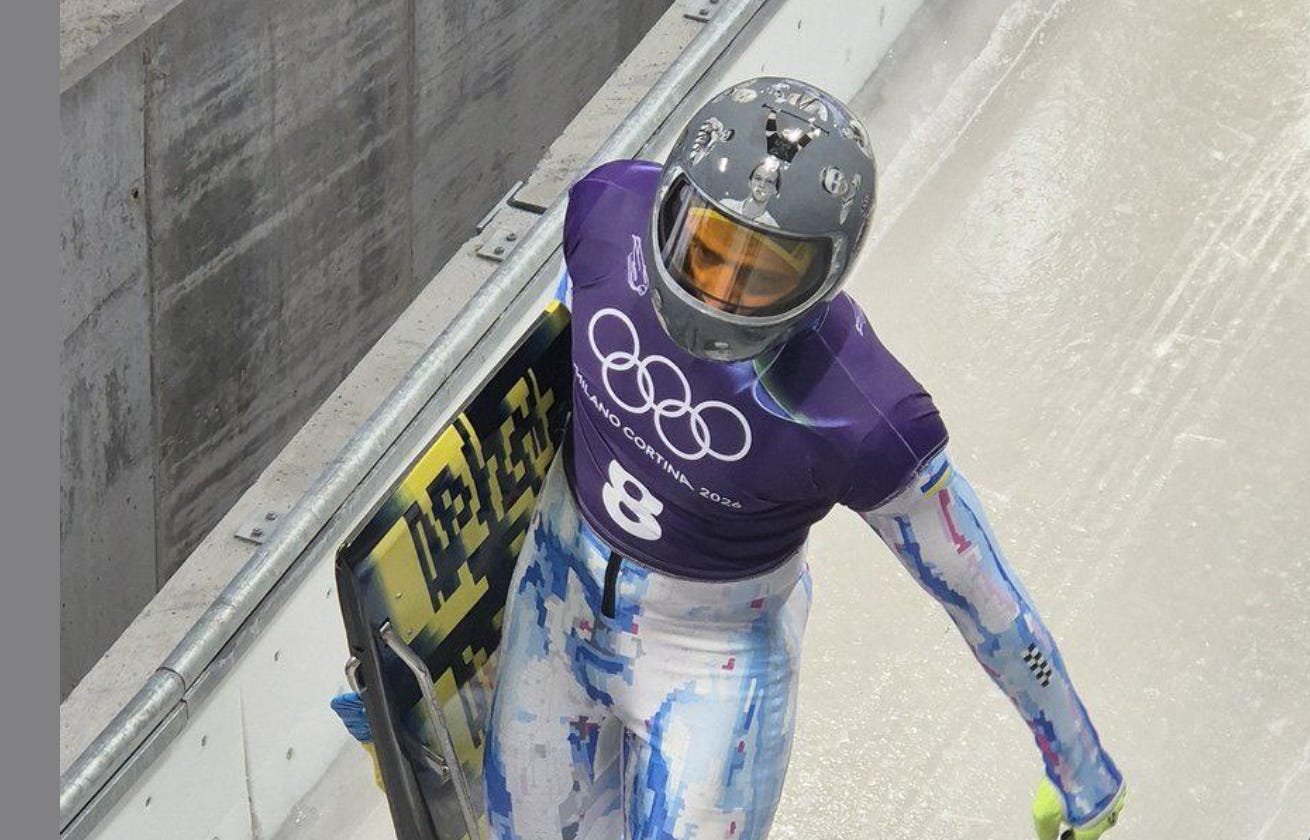
Vladyslav Heraskevych disqualified by the IOC from the Milano Cortina winter Olympics. Screenshot: Facebook
A last-minute intervention by the IOC president, Kirsty Coventry, an Olympian herself, meant although Heraskevych was banned from competing, he would avoid the humiliation of being sent home.
At least Smith and Carlos had the chance to compete for medals before leaving. Heraskevych is unlikely to be grateful for his consolation prize.
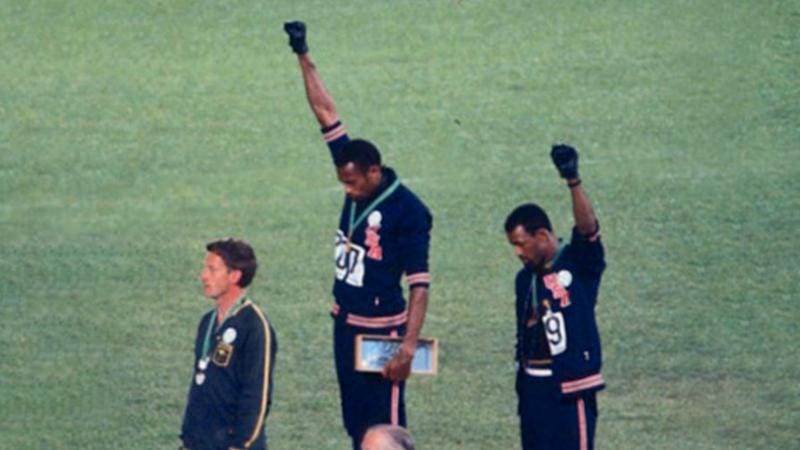
American medalists Tommie Smith and John Carlos, with their raised fists, were sent home from the Mexico 1968 Olympics for their protest.
There is only one way this will play out for the IOC; badly.
In 1968 there was no social media. In 2026 it sets the agenda.
By strictly enforcing a rule preventing athletes from any form of demonstration on the field of play, the IOC has not only magnified Heraskevych’s message, but guaranteed that it will live on.
Ironically, in protecting a politically neutral space for all athletes, the negative reaction aimed at the IOC will be politicised on multiple fronts.
The IOC knows as much.
“Yeah, I mean the consequences of it are the consequences,” IOC spokesman Mark Adams said in response to a question from The Sports Ambassador.
“And I’m sure in one sense, because he [Heraskevych] wants to get his message across, then in that sense it will have probably worked for him.
“But for us, it’s to concentrate on applying the rules, and that’s all we can do, and that’s what we’ve done.”
The IOC had attempted over several days to reach a compromise with Heraskevych, competing at his third Olympics and who was the flag bearer for the Opening Ceremony.
He was permitted to use his helmet in training. He could discuss any aspect of his personal memorial in press conferences, or mixed zones, or on social media.
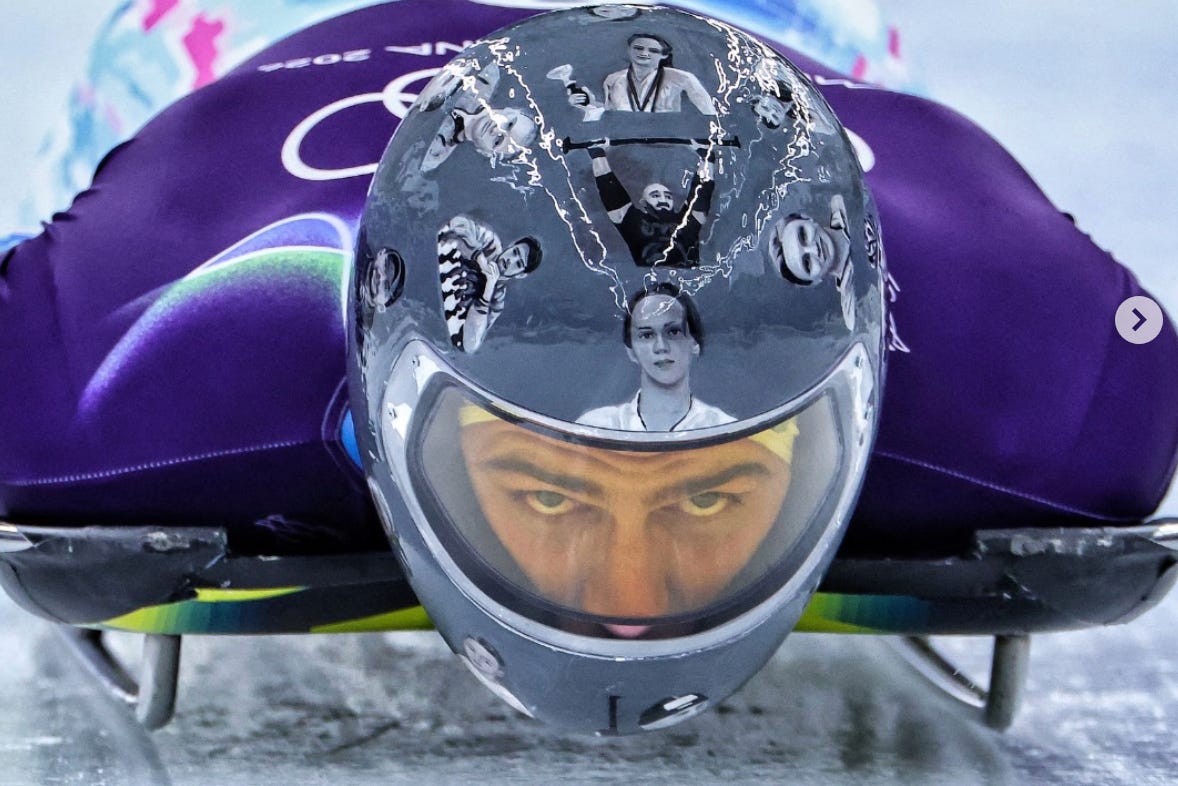
Ukraine’s Vladyslav Heraskevych wearing his ‘memory helmet’.
However, for each minute of the official skeleton competition, he was asked to respect the rules developed by thousands of Olympians who deemed the field of play and the medial podium should remain a sanctuary.
Heraskevych said he ‘would not betray’ his fallen friends.
The IOC suggested he could wear a black armband in competition instead. He rejected that offer too.
On the day of the final, he put out a statement saying:
“I never wanted a scandal with the IOC, and I did not create it.”
He believed the rules were being applied discriminatorily.
Not only was he steadfastly adamant in his refusal to comply with the rule, but he made several demands on the IOC:
1. To allow him to wear the ‘memory helmet’
2. To apologise for the pressure he had been put under
3. As a sign of solidarity with Ukraine, to provide electric generators for Ukraine’s sports facilities suffering from daily shellings.
Although he did not mention it in any of his statements, the IOC has been supporting Heraskevych – and other Ukrainian athletes - with Olympic scholarships, enabling them to continue training and competing in preparation for the games.
Neither did he mention the IOC’s establishment of a Solidarity fund for Ukraine following Russia’s 2022 invasion.
The IOC has not been unsympathetic to the challenges facing Ukrainian athletes since the war began. However, if it made an exception for Heraskevych’s helmet, it said, it would need to make exceptions for the many other athletes involved in the more than 130 wars currently being fought.
Hours before the skeleton final was due to begin, the IOC president personally met with Heraskevych to try one last time for a compromise.
Before being elected president in 2025, Kirsty Marshall was an Olympic swimmer for Zimbabwe. She knows what being an Olympian means.
“For me, I was not speaking to him in that room as a president,” Marshall said. “I’m speaking to him as an athlete. I really wanted to see him race today.”
Their meeting was described as emotional, one in which both athletes respected the other, but not even as a fellow athlete could the Olympic president persuade the Ukrainian to put aside his activism for the two minutes it would take for him to compete.
Knowing a disqualification was likely, Heraskevych described it as, ‘the price of dignity’.
Hours after their meeting, the IOC issued this statement:
“On an exceptional basis, after the very respectful conversation with the athlete, Coventry asked the IOC Disciplinary Commission (DC) chair to re-consider the withdrawal of Vladyslav Heraskevych’s accreditation for the Milano Cortina 2026 games. The chair of the IOC DC agreed to the request, which means Mr Heraskevych can continue to be at the Milano Cortina 2026 Olympic winter games despite not being able to compete.”
The saga has been playing out for days based on the IOC’s stance that it could not make an exception. Then it did. Perhaps the only exception should have been for the helmet itself, avoiding days of headlines and angst.
After all, the IOC made an exception for Heraskevych at the Beijing 2022 winter Olympics after he competed while wearing a hand painted sign in the colours of the Ukrainian flag, with the words ‘No War in Ukraine’.
In the four years since, the Ukrainian athlete might have wrongly believed he would still enjoy complete support from the IOC, given one of its other exceptions in 2022 was banning Russia after it invaded his country.
It’s been a tough day in Milano Cortina.
The tribute to fallen Ukrainian athletes will be Heraskevych’s lasting Olympic legacy, the IOC has made sure of that.
It may also be a significant marker in the legacy of a new IOC president with a mission to keep the Olympics politically neutral, while the planet swims in a rising tide of global political division.